The History of Murano Glassmaking: Eight Centuries of Venetian Fire and Craft
There is a small island in the Venetian Lagoon, barely a kilometre long, that has shaped the course of decorative art for eight hundred years. Murano is not famous for its size or its scenery. It is famous for its fire — for the furnaces that have burned continuously since the 13th century, and for the masters who have stood before them, transforming molten silica into objects of extraordinary beauty.
To hold a piece of Murano glass is to hold a fragment of that history. Understanding where it comes from — the politics, the craft, the centuries of accumulated knowledge — changes the way you see it.
The Origins: Venice and the Fire Risk
Glassmaking in Venice predates the move to Murano. By the 10th century, Venetian glassmakers were already producing work of sufficient quality to attract trade across the Mediterranean. The city was a crossroads of East and West, and its craftsmen absorbed techniques from Byzantine, Islamic, and Roman traditions, synthesising them into something distinctly Venetian.
But glass furnaces are dangerous. In a city built almost entirely of wood, the risk of fire was existential. In 1291, the Venetian Republic issued a decree ordering all glassmakers to relocate their furnaces to the island of Murano, a short boat ride from the city. The official reason was fire safety. The practical effect was containment — of the craftsmen, their knowledge, and their secrets.
The Murano Masters: Privilege and Captivity
The Republic of Venice understood that its glassmakers possessed something of immense strategic and commercial value. Murano glass was exported across Europe and the known world; it was a source of significant revenue and diplomatic prestige. The techniques used to produce it — particularly the methods for achieving clarity, colour, and the distinctive millefiori and filigrana patterns — were state secrets.
To protect them, the Republic granted Murano glassmakers extraordinary privileges. Masters were permitted to wear swords, a right normally reserved for the nobility. Their daughters could marry into Venetian patrician families. They were, in effect, elevated to a quasi-noble status.
But they were also, in a meaningful sense, prisoners. A glassmaker who attempted to leave Venice and take his knowledge to a foreign court faced severe consequences — up to and including death. The Republic's agents were instructed to pursue defectors and, if persuasion failed, to take more permanent measures. The knowledge locked inside those furnaces was considered too valuable to allow it to leave.
The Golden Age: Innovation and Influence
The 15th and 16th centuries represent the apex of Murano's influence. It was during this period that Murano glassmakers achieved what had previously been considered impossible: cristallo, a glass of near-perfect clarity and colourlessness that rivalled rock crystal. The technique, developed by Angelo Barovier in the mid-15th century, involved the careful purification of raw materials and the addition of manganese dioxide to neutralise the natural green tint of Venetian glass.
Cristallo transformed the European luxury market. Suddenly, glass could be used for mirrors, for spectacle lenses, for the finest tableware. Murano became the centre of a global industry, and its masters were among the most sought-after craftsmen in the world.
Other innovations followed. Lattimo, an opaque white glass that mimicked Chinese porcelain. Calcedonio, which replicated the appearance of semi-precious stones. And the extraordinary filigrana technique — the embedding of fine threads of white or coloured glass within clear glass to create intricate lace-like patterns that remain, to this day, among the most technically demanding achievements in the history of the craft.
Decline and Revival
The 17th century brought competition. Despite the Republic's best efforts, some glassmakers did escape — to Bohemia, to France, to England — and the techniques they carried with them seeded rival industries. Bohemian crystal, with its different chemical composition and capacity for deep cutting, began to challenge Murano's dominance in the European market.
By the 18th century, Murano's commercial position had weakened considerably. The fall of the Venetian Republic in 1797, at the hands of Napoleon, dealt a further blow. The structures that had protected and sustained the glassmaking tradition — the guilds, the privileges, the state patronage — were dismantled.
The revival came in the 19th century, driven by a renewed European interest in historical craft traditions and by a generation of Murano masters who were determined to reclaim the island's heritage. The 20th century brought a new wave of innovation, as Murano glassmakers began collaborating with artists and designers — figures such as Pablo Picasso, Jean Cocteau, and later Ettore Sottsass — to produce work that was simultaneously rooted in tradition and radically contemporary.
The Craft Today
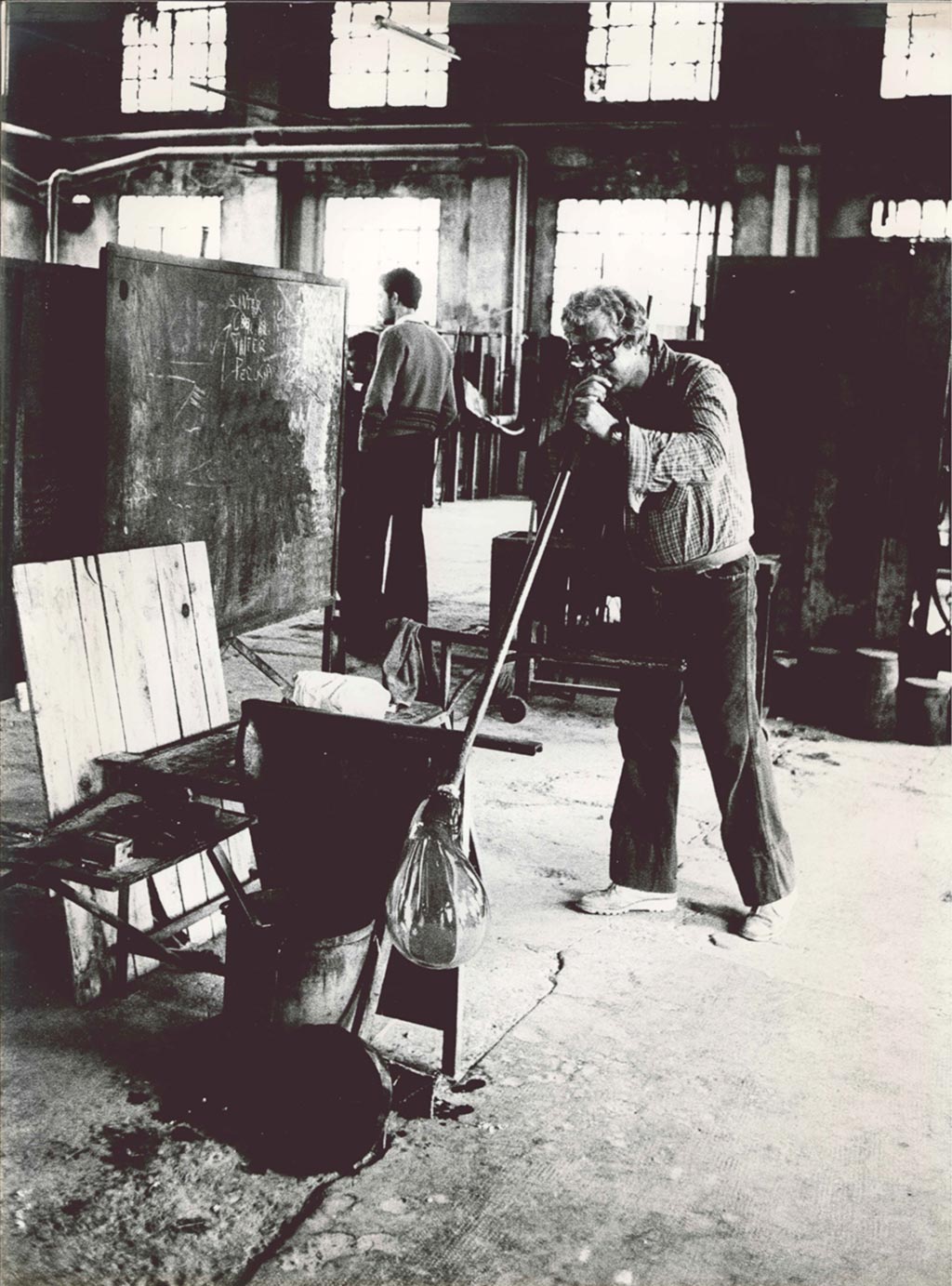
Today, Murano remains the centre of the world's finest handmade glass. The furnaces still burn. The techniques — filigrana, millefiori, sommerso, incalmo — are still taught by masters to apprentices, as they have been for centuries. The knowledge is still passed down by hand, by demonstration, by the accumulated wisdom of generations who have stood before the same fire.
What has changed is the context. Murano glass now exists in a world of mass production, of machine-made crystal, of objects designed to be identical and interchangeable. Against that backdrop, the individuality of a hand-blown piece — the slight asymmetry, the unique distribution of colour, the mark of the breath that shaped it — is not a flaw. It is the point.
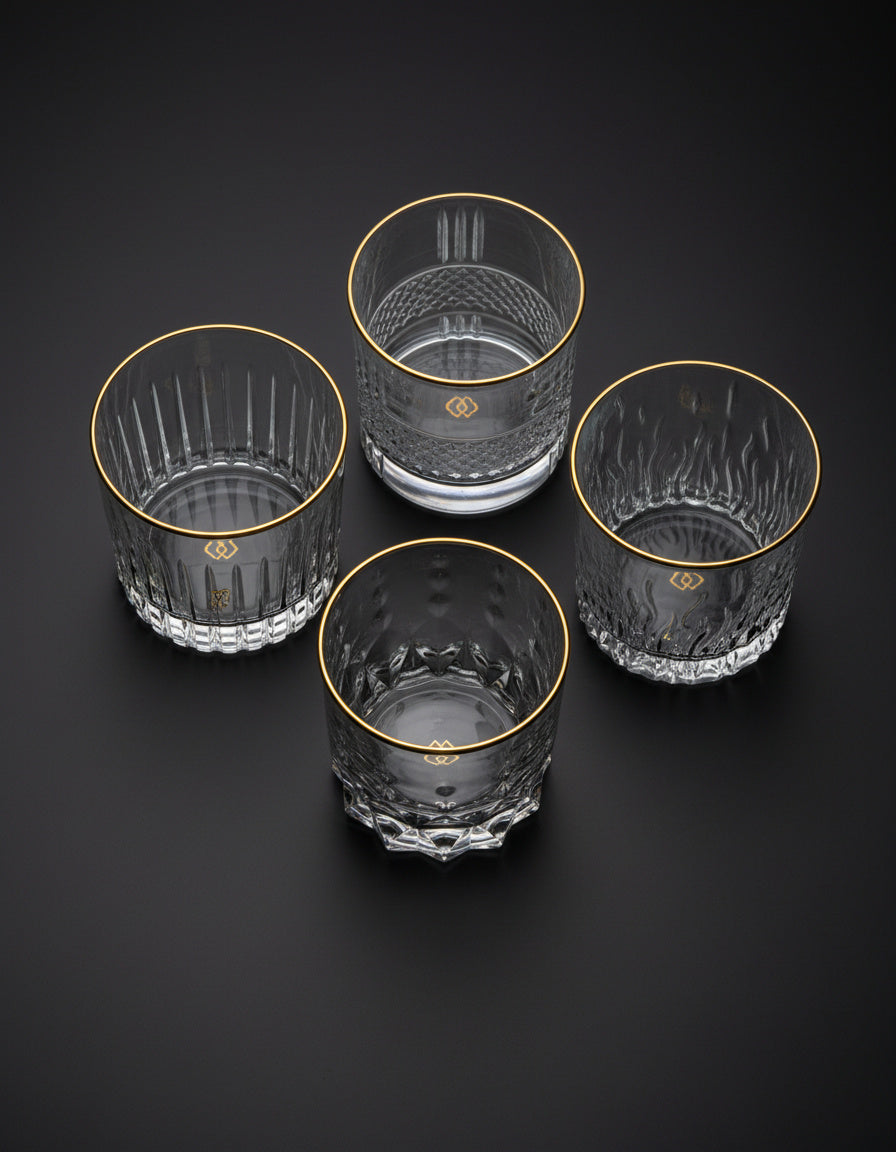
Each piece of Reign Whiskey Glass is made by Murano artisans who carry this tradition forward. The 24k gold detailing applied to each glass connects it to a lineage of gilded Venetian work that stretches back to the Renaissance. When you pour a whiskey into one of these glasses, you are not simply using a vessel. You are participating in eight centuries of craft.
That is worth knowing. And worth preserving.